
What if you could feel better in one week ?
Angela enjoys helping people improve their relationships with God, others, and self.
EMDR Intensive therapy can greatly accelerate your healing process.
It can even happen in as little as one week for some clients.

What is EMDR Therapy?
EMDR stands for eye-movement desensitization and reprocessing. EMDR is an 8-stage process that helps to reduce the emotional intensity of thoughts and memories and helps clear the body’s fear responses.
While there are no guarantees about the outcome of EMDR therapy, it often results in changes in fewer sessions than talk therapy. The majority of people find EMDR helpful in reducing anxiety, excessive rumination, and unpleasant body reactions. It can also help slow down impulsive reactions and increase confidence about handling future situations. Many people also report that it helps them access spiritual comfort.
Visit the EMDR International Association to learn more. Angela is a Certified EMDR Therapist.

What is the best use of your time?
EMDR therapy can be used in a 50-minute session format. This format may best suit clients who have an ongoing distressing situation, those who struggle to stay connected with their emotions, and those who need financial assistance.
However, a lot of time is spent in the opening and closing work when working on an hourly basis.
A 3-hour Intensive session can accomplish as much as 6 shorter sessions which means you start feeling better faster.
The charts on this page show how 3 hours of time is split in weekly sessions versus an EMDR intensive.
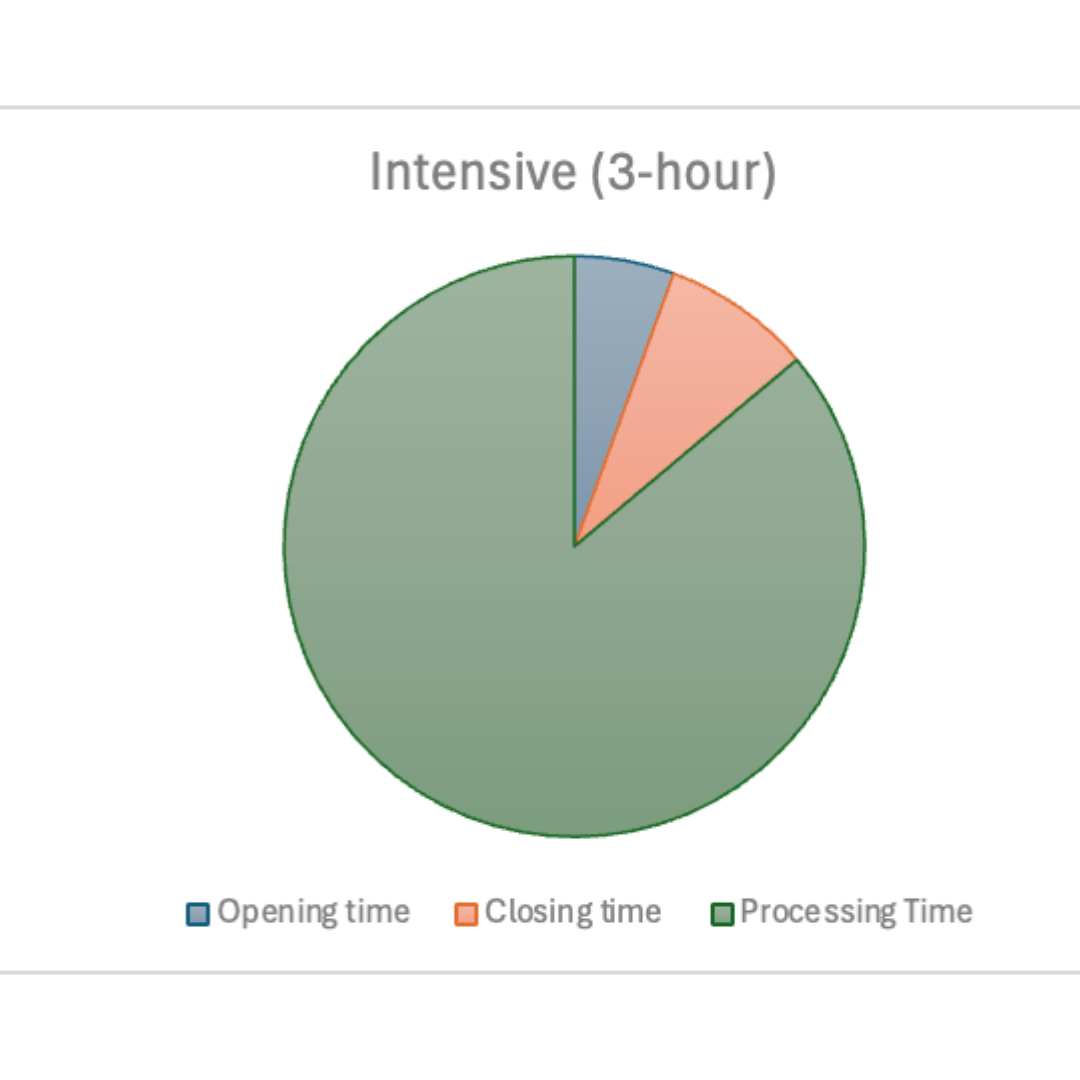
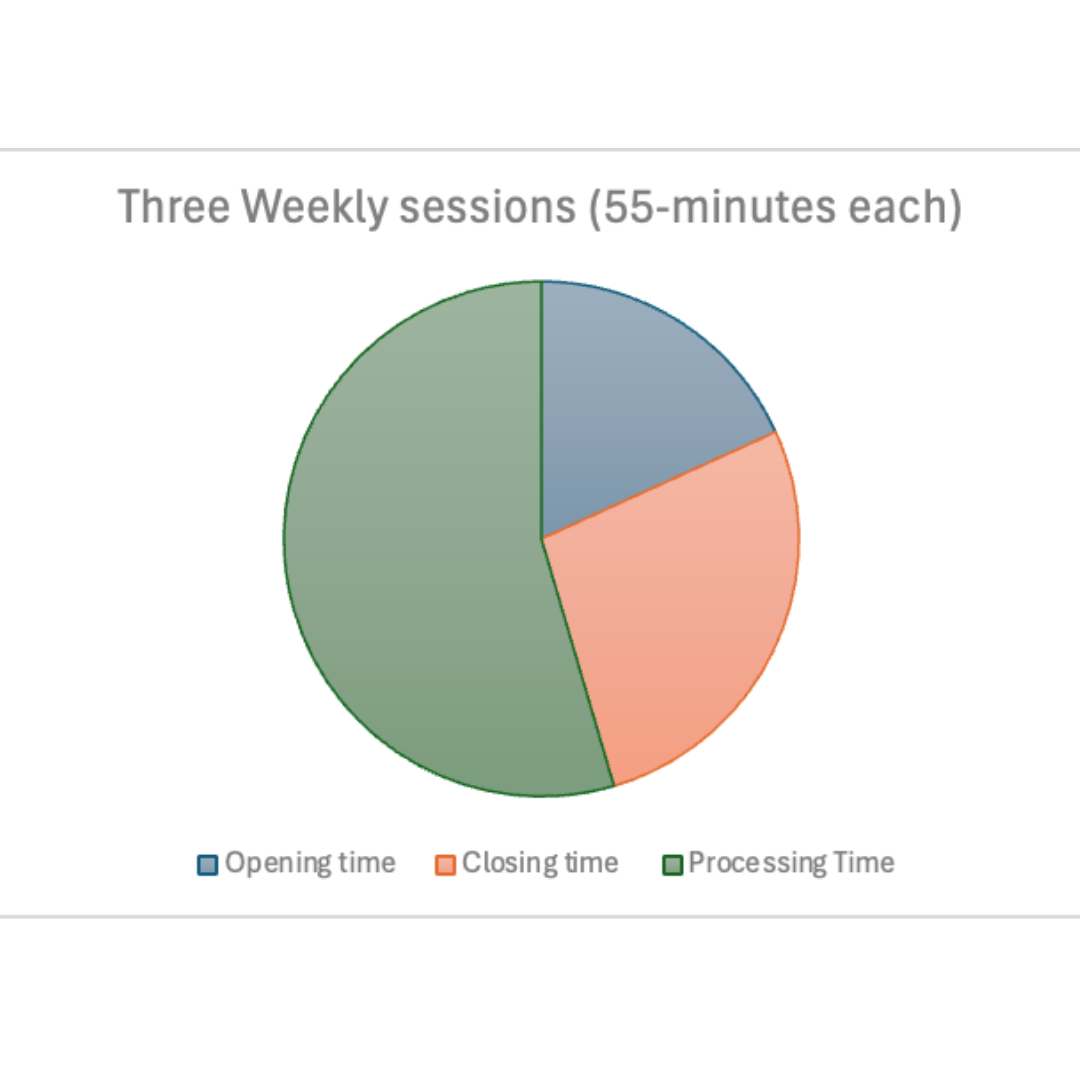
Overview of the process
Step 1. Schedule a free consultation to discuss your needs and the basics of cost and scheduling.
Step 2. Schedule a 90-minute evaluation session. This can occur in-office or online (if you are in a state where Angela is licensed).
Step 2b. Angela will determine whether you are ready for EMDR and, if so, will schedule your Intensive dates as and a follow up appointment.
Step 3. Attend EMDR Intensive over the course of three days.
Step 4. Attend a Follow-up/Closing session to discuss progress, consolidate gains, and determine whether additional EMDR sessions are needed/desired.
FAQs
-
Angela works with individual adults.
EMDR clients must be located in DC, VA, TX, FL, or SC.
Angela works primarily with clients who have challenges with interpersonal dynamics and/or have disturbing memories or thoughts or behavioral patterns that disrupt normal life. Most clients have symptoms of anxiety or PTSD.
Many clients have a primary therapist and choose to see Angela for a limited time for EMDR.
If EMDR is not the right fit, talk therapy and art therapy are also available.
-
The initial Evaluation session is $385.
The three-day intensive is $4500. This includes the client workbook, three-days of intensive treatment, and a follow-up session.
You are scheduling a significant amount of time in the therapist’s schedule and time books out far in advance.
A 50% deposit is due upon scheduling. The deposit is refundable if you cancel at least 4 weeks in advance. Cancellations within the 4-week window forfeit the deposit.
-
EMDR Intensives are 12-15 hours over the course of three days in the same week.
Follow-up sessions can be scheduled as needed.
The goal is to get you feeling better quickly so you don’t have to attend weekly or bi-weekly therapy appointments.
-
This depends on the issue being discussed. For some clients the faith component is exploring the barriers that prevent the client from inviting God into a particular area of life. For other clients the focus is on developing spiritual disciplines such as Bible reading, prayer, and community involvement. For yet others, it is about developing or re-establishing trust in God after being betrayed by people or feeling angry that God did not intervene in a particular situation.
-
We can still work together. Spiritual matters are often an important part of how we view and cope with challenges in our lives, but not every counselor will ask about or invite that type of discussion. I am open to talking about spiritual matters regardless of your faith background. Similarly, if you do not want to talk about your spiritual beliefs, we can focus on other topics.
-
You may use an HSA/FSA debit card to pay for counseling even if your insurance company does not provide reimbursement.
You may be able to receive out-of-network reimbursement for part of your EMDR therapy but this varies greatly by insurance plan.
There is no specific billing code for EMDR intensives, but in some cases, medical necessity can be argued.
For the most accurate information, contact your insurance company directly and ask to speak with a case manager to discuss coverage for Intensive EMDR therapy.
-
Angela has partnered with Thrizer for out of network claims processing. There is a nominal fee for utilizing this service. You may choose whether to pay in full and have Thrizer process your claims (1% service fee) or contract with Thrizer to only pay your estimated co-insurance and have them process the claims (5% service fee).
-
Each state and district has a process for licensing therapists. The licensing rules dictate what courses are required and how many hours of supervised experience the therapist must have before practicing independently.
In theory the licensing boards also make sure that each therapist has the required number of continuing education units but since this is largely an honor system it is often more helpful to ask what training and experience they have with your type of problem.
A web search of the mental health licensing boards in your state should provide you with either an online license search or a way to contact the appropriate licensing board to verify that the professional holds an active license in good standing. Keep in mind that in most states there are separate licensing boards for each profession: marriage and family therapists, licensed professional counselors, social workers, addictions counselors, and psychologists.
Most certifications are managed by a national or international association. For example, the EMDR International Association (EMDRIA) is one of several certifying bodies for EMDR therapists. A search of the certifying association's website should yield a list of currently certified therapists for that specialty. Certification is an indicator that the therapist has completed a rigorous level of training in a particular specialty and has committed to ongoing training in that specialty.
-
While few therapists will give you free therapy time, you can usually ask a therapist in general terms how they work with people who have symptoms and concerns similar to yours and how often they work with those types of clients.
If you feel very comfortable with the therapist but have concerns about their lack of expertise on your issue, you might ask them how they would proceed if the therapy seems to be stuck. A good therapist will have a supervisor, mentor, or peer consultation group that can help them brainstorm how to proceed when therapy stalls.